Zimbabwe Safari Guide: Where to Go, When to Visit & What to Expect

Zimbabwe deserves far more consideration than it often receives when travellers begin comparing African safari destinations. A well-planned Zimbabwe safari can combine the elephant-rich waterholes and classic big-game viewing of Hwange National Park with walking and canoe safaris in Mana Pools, the remote wilderness of Gonarezhou, Lake Kariba and Matusadona, and time at Victoria Falls, all within one remarkably varied country.
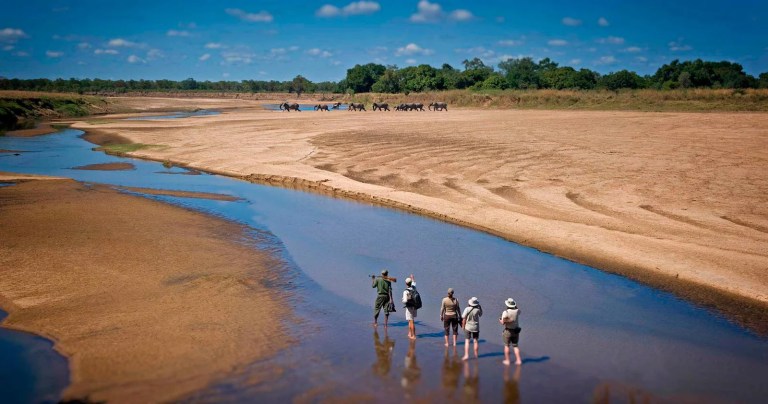
What makes Zimbabwe particularly rewarding is not simply the wildlife. Guiding has a strong professional tradition, many safari areas retain a spacious and uncrowded feel, and the experiences available go well beyond game drives. Depending on where you travel, your days might include walking through riverine woodland, watching elephants arrive at a waterhole, canoeing on the Zambezi, exploring remote baobab country or slowing the pace beside Lake Kariba.
This Zimbabwe safari guide explains where to go, when to visit and what to expect, with practical advice on the country’s major safari regions, seasons, wildlife experiences, camps and itinerary combinations. The right choice depends on far more than finding the “best” park: season, guiding style, activities, comfort, travel time and the pace of the wider journey all shape how Zimbabwe feels on safari.
Planning a Zimbabwe Safari?
Zimbabwe works particularly well when the parks, camps and season are matched carefully. We can design a tailor-made itinerary around the wildlife, guiding, comfort, pace and safari experiences that matter most to you.
Why Zimbabwe Is Such a Rewarding Safari Destination
One of Zimbabwe’s greatest strengths is its guiding culture. Becoming a professional guide involves formal examinations, practical experience and an extended apprenticeship process, and that emphasis on field knowledge is reflected in many of the country’s safari camps. The individual guide and property still matter, but choosing Zimbabwe gives travellers access to a safari tradition in which interpretation, tracking and understanding animal behaviour are central to the experience rather than simply finding the next sighting.
The country also offers unusually different safari environments within a single itinerary. Hwange is the natural choice for classic game drives, elephants, predators and productive dry-season waterholes. Mana Pools changes the rhythm completely, with Zambezi floodplains, walking safaris, canoeing and intimate seasonal camps. Gonarezhou brings scale, baobabs, elephants and the dramatic Chilojo Cliffs, while Matusadona and Lake Kariba introduce boat-based wildlife viewing and a slower waterside pace. Matobo Hills adds rhino tracking, granite landscapes and important cultural history, while Victoria Falls makes an easy beginning or end to many Zimbabwe safari holidays.
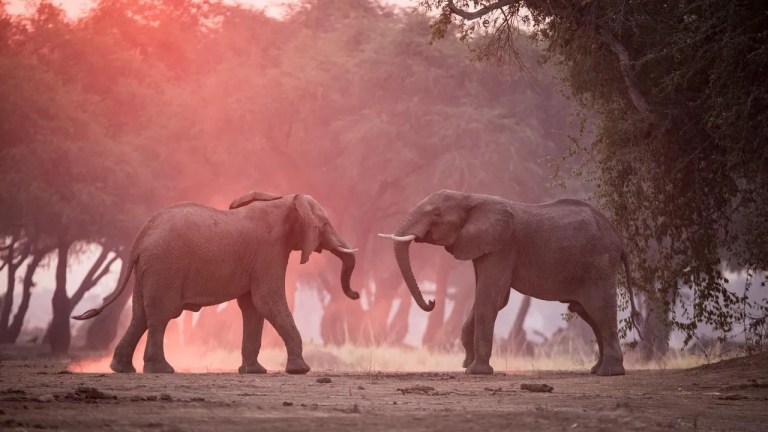
Season makes a significant difference. Across many of Zimbabwe’s major wildlife areas, the dry months from roughly May to October provide the most reliable classic game viewing as vegetation thins and wildlife becomes increasingly dependent on permanent rivers, pans and waterholes. In Hwange, supplemented water points play an important ecological role and can attract particularly high concentrations of elephants during the late dry season. Mana Pools is more seasonal still, with many camps and activities centred on the drier months when access improves and wildlife concentrates along the Zambezi Valley.
That range also makes Zimbabwe more versatile than its reputation sometimes suggests. A first-time visitor can comfortably combine Victoria Falls and Hwange for an accessible introduction to the country, while travellers wanting a deeper or more adventurous safari can add Mana Pools, Gonarezhou or Matusadona. For repeat safari travellers in particular, Zimbabwe offers the chance to move beyond a vehicle-only experience without sacrificing wildlife quality, excellent camps or thoughtful service.
Where to Go on Safari in Zimbabwe
Hwange National Park: Classic Wildlife and Elephants
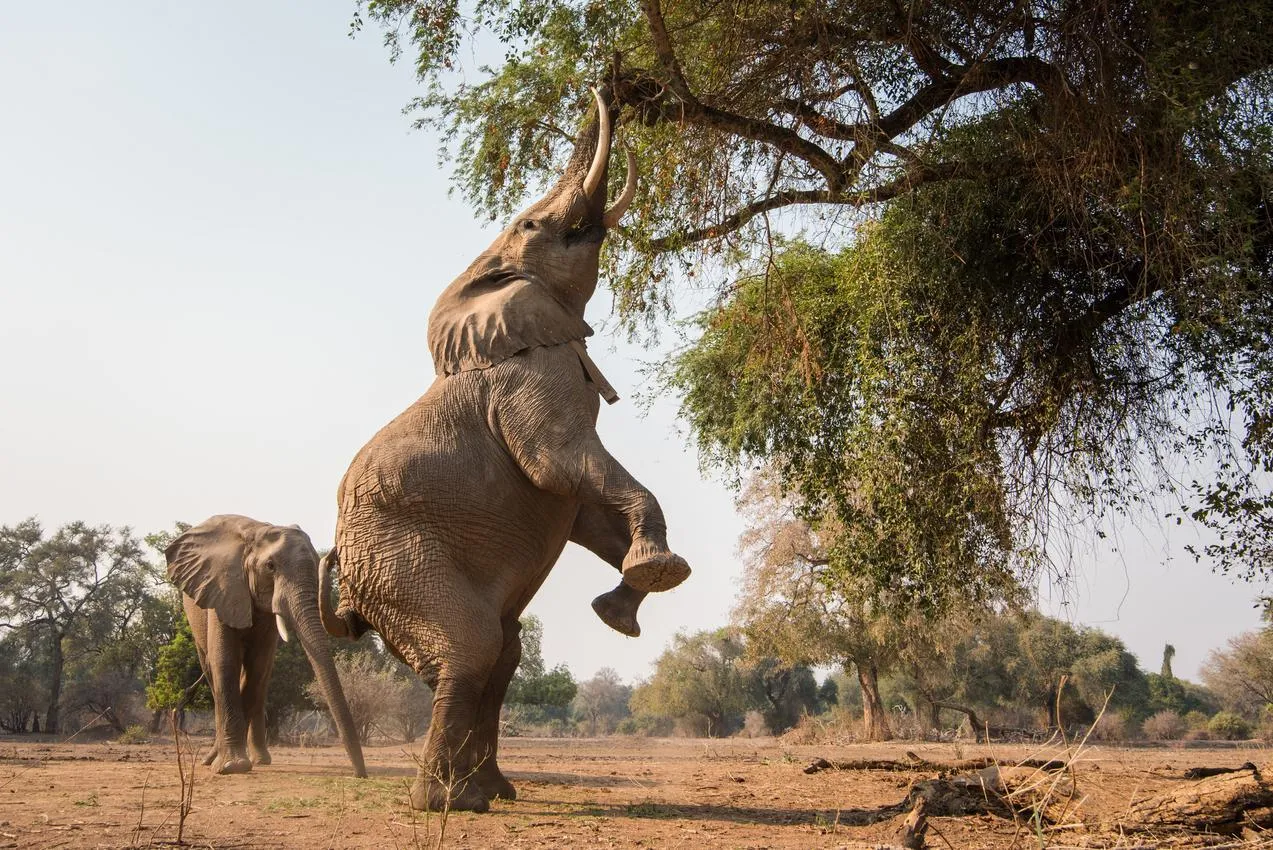
For many travellers, Hwange is the natural starting point for a Zimbabwe safari. Covering approximately 14,650 square kilometres, Zimbabwe’s largest national park supports elephants, lions, leopards, buffalo, painted dogs, sable, roan and a broad range of plains game across teak woodland, mopane, open grassland and seasonal pans. Its network of natural and pumped waterholes becomes particularly productive as the dry season progresses, when elephants and other wildlife increasingly concentrate around reliable water. Hwange works well for first-time safari travellers because game drives are familiar and accessible, while the scale of the park and choice of camps still allow a more secluded experience when the right area is selected.
Mana Pools National Park: Walking, Canoeing and the Zambezi
Mana Pools offers a very different kind of safari. Set along the Zambezi River in northern Zimbabwe, the park is defined by floodplains, riverine woodland, the four pools from which it takes its name and a strong sense of wilderness. Elephants, buffalo, lions, painted dogs, hippos, crocodiles and abundant birdlife are among the attractions, but the defining feature is how you can experience them. Guided walks, canoe safaris, game drives and river-based activities allow you to explore at a slower pace and from more than one perspective. Mana Pools is particularly well suited to travellers who value expert guiding and immersion over large lodge infrastructure, and we generally prefer at least three nights, with four providing a better balance of activities and unhurried time in the park.
Victoria Falls: Waterfalls, Wildlife and the Zambezi
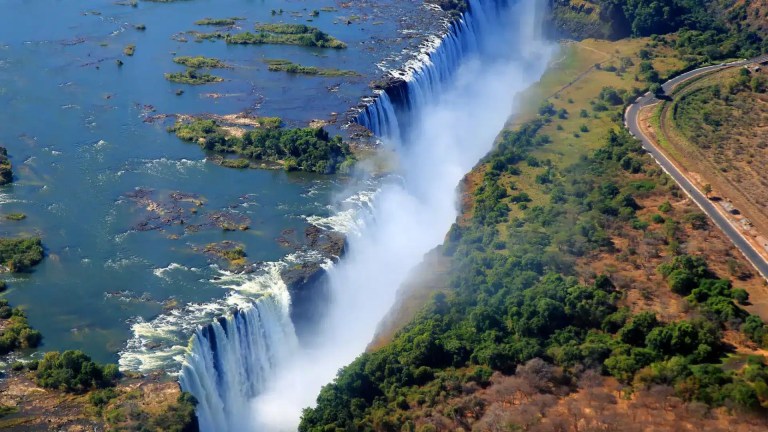
Victoria Falls is much more than a convenient beginning or end to a Zimbabwe safari. For many travellers it is one of the major destinations within the itinerary, usually warranting two or three nights. Beyond seeing the Falls themselves, the area offers Zambezi River cruises, wildlife experiences, helicopter flights, guided activities and access to Zambezi National Park and private wildlife areas close to town. Accommodation also ranges from established hotels near the Falls to safari-style properties overlooking bush and waterholes, and more secluded lodges positioned along the Zambezi. Current Victoria Falls properties actively market game drives, river cruises and wildlife experiences alongside visits to the Falls.
From an itinerary perspective, Victoria Falls is also one of Southern Africa’s most useful safari gateways. Hwange combines naturally with it within Zimbabwe, while Chobe in Botswana is close enough to add by road, and the Zambian side of the Falls opens the route towards Zambia. That makes Victoria Falls particularly valuable for travellers who want to combine a major natural attraction with safari rather than choose between the two. For Go Beyond Safaris, it also gives us scope to tailor the stay around the traveller, whether that means a riverside lodge, a safari property outside town, a family-friendly hotel or a higher-end private reserve experience.
Gonarezhou National Park: Remote Wilderness in the Southeast
Gonarezhou is for travellers who want their safari to feel genuinely remote. Zimbabwe’s second-largest national park stretches across more than 5,000 square kilometres in the southeast and is known as the “place of elephants”. The landscape is a major part of the appeal: enormous baobabs, mopane woodland, river systems, pans and the red sandstone Chilojo Cliffs create a setting that feels distinctly different from Hwange or Mana Pools. The park supports the Big Five as well as painted dogs and more than 450 recorded bird species, although this is not a destination we would choose simply to chase a checklist. Gonarezhou rewards patience, good guiding and travellers who appreciate space, scenery and the privilege of exploring a large conservation landscape with relatively little tourism traffic.
Matusadona and Lake Kariba: Wildlife Beside the Water
Matusadona National Park rises from the southern shore of Lake Kariba, bringing together woodland, escarpment country, grasslands and the lake itself. Wildlife includes elephants, buffalo, lion, leopard, hippo and a variety of antelope, while boating adds another dimension to the safari. The park has also entered an important period of wildlife restoration: painted dogs were reintroduced in February 2026 and black rhino returned in June 2026 after an absence of more than a decade. Those conservation milestones should not be interpreted as guaranteed sightings; rather, they add to the significance of a recovering ecosystem. Matusadona works particularly well for travellers who enjoy wildlife but also want time on the water, slower afternoons and the atmosphere of Lake Kariba.
Matobo Hills: Rhino Tracking, Granite Landscapes and Culture
Matobo Hills provides a very different addition to a Zimbabwe safari. South of Bulawayo, the region is known for its distinctive granite formations, cultural and archaeological significance and protected rhino populations. It makes most sense for travellers who want to add landscape, history and guided rhino experiences rather than another conventional big-game safari area.
When to Visit Zimbabwe for Safari
May to July: Cooler Conditions and the Start of the Dry Season
May, June and July are excellent months for travellers who prefer cooler temperatures and landscapes that have not yet reached the dryness of late season. Mornings can be surprisingly cold, particularly on open vehicles before sunrise, so warm layers are important. Wildlife becomes progressively easier to locate as surface water diminishes, while walking conditions in areas such as Mana Pools become increasingly attractive as the season settles. These months can be particularly appealing if your priority is balancing wildlife quality with comfortable daytime temperatures rather than chasing the highest possible concentration of animals around water.
August to September: Prime Dry-Season Safari Conditions
August and September are among the strongest all-round months for a classic Zimbabwe safari. Vegetation is thinner, permanent water becomes increasingly important and wildlife concentrations build around rivers, pans and waterholes. Hwange can be particularly impressive for elephants during this period, while Mana Pools enters its prime season for game viewing, walking and Zambezi-based activities. Days become progressively warmer through September, but conditions are generally more moderate than October. Demand is correspondingly high, so the smaller camps and preferred guides are worth securing well in advance.
October: Exceptional Wildlife, Heat and Dry-Season Intensity
October can produce some of Zimbabwe’s most dramatic wildlife viewing, but it comes with a clear trade-off: heat. By late dry season the landscape is parched, inland water is scarce and animals can be heavily concentrated around the remaining dependable water sources. In Mana Pools, daytime temperatures can approach or exceed 40°C during hot spells, and similar heat can affect the lowveld and Zambezi Valley. For heat-tolerant travellers, the intensity of the wildlife experience can be exceptional. For families with younger children, older travellers or anyone who finds high temperatures draining, August or September may provide a better overall experience.
November to April: Green Season, Summer Rains and Victoria Falls
Zimbabwe’s summer rains transform the landscape. Vegetation becomes green, migratory birds arrive and many species give birth, but wildlife is more dispersed and road conditions can become more difficult in remote areas. Some seasonal camps, particularly in Mana Pools and other remote destinations, close for part of this period, so a green-season itinerary needs to be built around properties and areas that are operating reliably. Victoria Falls follows a different seasonal rhythm from the safari parks: water volume builds after the summer rains, with the Falls generally at their most powerful from around February into May. This makes the “best time” for Zimbabwe dependent on what matters most to you, peak wildlife concentrations, cooler temperatures, green landscapes, birding or seeing Victoria Falls at high flow.

What to Expect on a Zimbabwe Safari
Zimbabwe can feel different from safari destinations where the experience is dominated almost entirely by game drives. In Hwange, vehicle-based wildlife viewing remains central, but elsewhere the pace may shift towards walking, canoeing, boating and spending longer periods interpreting tracks, behaviour and the landscape with a professional guide. That variety is one of the country’s strengths: two areas within the same itinerary can deliver noticeably different safari experiences rather than simply changing the scenery around a similar daily routine.
Wildlife viewing should still be approached with realistic expectations. Hwange can produce excellent concentrations of elephants and other large mammals during the dry season, while Mana Pools is particularly rewarding for elephants, predators, painted dogs and Zambezi wildlife. Gonarezhou and Matusadona may feel more spacious and less predictable. That is not necessarily a disadvantage. For many experienced safari travellers, the appeal lies in having fewer vehicles, allowing time for behaviour to develop and enjoying the wider ecosystem rather than treating every drive as a race to complete a species list.
Walking safaris are one of Zimbabwe’s defining experiences, but they are not simply game drives conducted on foot. A good walk is about understanding tracks, plants, animal behaviour, wind direction and how smaller details fit into the wider environment. Encounters with large wildlife can happen, but they are managed carefully and are never guaranteed. Canoeing in Mana Pools adds another dimension, particularly along the Zambezi where elephants, hippos, crocodiles and birdlife may all become part of the experience from water level. Travellers who want these activities should choose the camp and guide deliberately rather than assume every property offers the same programme.
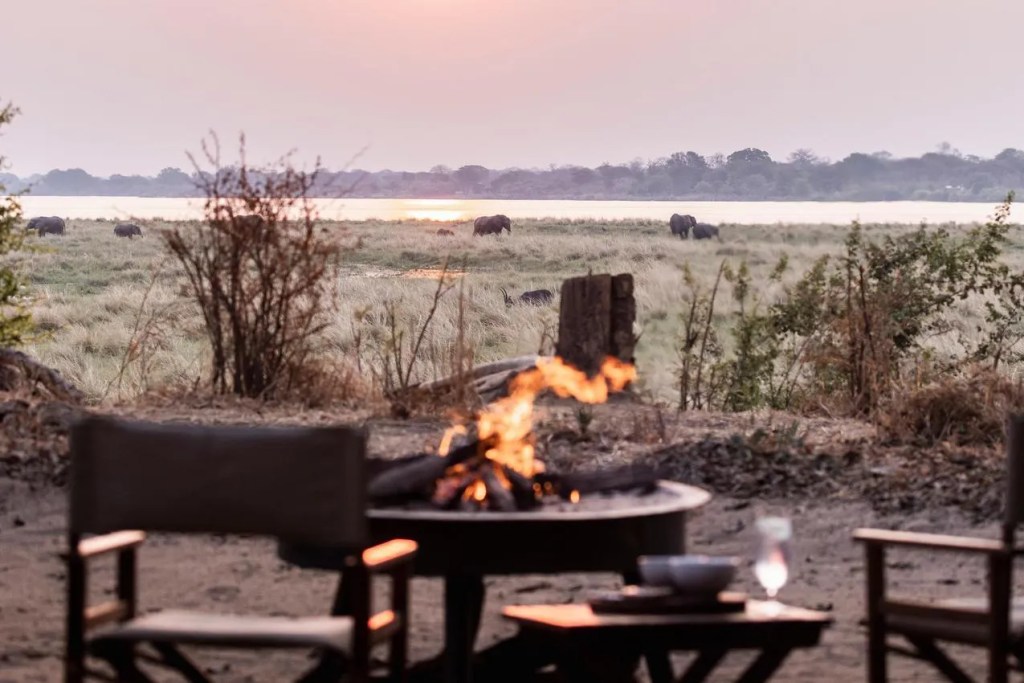
Accommodation ranges from polished permanent lodges with substantial rooms, swimming pools and extensive facilities to small seasonal tented camps designed around immersion in the bush. Neither is automatically the better choice. In Mana Pools, a simpler seasonal camp in an excellent location with outstanding guiding may offer a richer safari than a more elaborate property positioned further from the wildlife areas you want to explore. In Hwange, permanent lodges and intimate bush camps can both work extremely well. The important question is how the property affects access, guiding, activities, privacy and the daily rhythm of your safari.
Zimbabwe can suit first-time safari guests, couples, honeymooners, private groups and repeat travellers, but the right itinerary differs for each. Families may prefer a more accessible combination such as Victoria Falls and Hwange, with carefully selected camps and sensible transfer times. Travellers returning to Africa may be drawn towards Mana Pools, Gonarezhou or Matusadona for a more immersive and less vehicle-dependent experience. This is where a tailor-made African safari becomes particularly valuable: the country offers enough variety that the experience can be shaped around comfort, activity level and the way you actually want to spend your time.
How to Plan a Zimbabwe Safari Itinerary
Start With the Experience, Not the Number of Parks
A stronger itinerary starts by deciding what you want the safari to feel like. If your priority is classic wildlife viewing and elephants, Hwange may deserve the most time. If walking and canoeing are important, Mana Pools needs to be included in the right season. If remoteness and landscape matter more than predictable game density, Gonarezhou may be the better choice. Trying to include every major park can create an itinerary that looks impressive on paper but spends too much time in transit and not enough time actually on safari.
Use Victoria Falls and Hwange as a Natural First Combination
For a first Zimbabwe safari, Victoria Falls and Hwange form one of the easiest combinations. Two nights around Victoria Falls and three or four nights in Hwange can work well as a compact trip, while longer journeys can use this as the starting point before continuing deeper into the country. The contrast is useful: Victoria Falls provides restaurants, activities and a more conventional hotel environment, while Hwange shifts the focus firmly towards wildlife and the rhythm of camp life. It also avoids making the first few days of the itinerary unnecessarily complicated.
Add Mana Pools When You Want a More Immersive Safari
Mana Pools is usually worth adding because it changes the nature of the trip rather than simply providing another game-viewing area. Three nights is a practical minimum, but four often works better when walking, canoeing and game drives are all part of the plan. The park’s seasonal nature also means it should be treated as a deliberate component of the itinerary rather than added at the last minute. For travellers combining Zimbabwe with Zambia, the Zambezi Valley can also create a natural thematic link between Mana Pools and destinations such as the Lower Zambezi.
Use Flights Selectively Rather Than Turning the Trip Into an Airport Tour
Zimbabwe’s best safari regions are spread across a large country, so internal flights are often the most sensible way to connect remote parks. That does not mean every transfer should involve another aircraft. Road and rail options can be appropriate on some routes, particularly around Victoria Falls and Hwange, while flying becomes more valuable when linking distant areas such as Mana Pools, Matusadona or Gonarezhou. The aim is to use the fastest or most interesting transfer where it improves the journey, while avoiding a schedule in which every second day is dominated by packing, waiting and changing camps.
Choose Camps for Location, Guiding and Activities – Not Just the Room
The most expensive lodge is not automatically the best choice for a particular Zimbabwe safari. A property’s location can influence how much time you spend driving to productive wildlife areas, whether walking or water activities are available and how many other vehicles you may encounter. Guiding quality, vehicle arrangements, camp size and the flexibility of the activity programme can matter more than elaborate room features. We would rather match a traveller to the right camp in the right part of the park than select accommodation on appearance alone and compromise the safari around it.
Is Zimbabwe the Right Safari Destination for You?
Zimbabwe is an excellent choice if you value strong guiding, varied ways to experience wildlife and safari areas that can feel spacious rather than heavily trafficked. It can work for a first African safari, particularly through a well-paced Victoria Falls and Hwange combination, but it becomes even more compelling for travellers who want to go beyond the standard game-drive format. Mana Pools brings walking and canoeing into the journey, Gonarezhou adds remoteness and dramatic landscapes, while Matusadona and Lake Kariba provide a completely different water-based rhythm.
The key is not trying to fit every Zimbabwe safari destination into one journey. Choose two or three areas that complement each other, stay long enough for the experience to unfold and match the camps to the activities, season and level of comfort you want. Done well, a Zimbabwe safari can combine serious wildlife viewing with excellent guiding, intimate camps, walking, rivers, lakes and a genuine sense of wilderness, without requiring luxury to mean excess.
Ready to Plan Your Zimbabwe Safari?
We design tailor-made Zimbabwe safaris around the season, wildlife areas, camps, guiding, activities and travel pace that best suit you.
Zimbabwe Safari FAQs
About the Author
Nick Wigmore is Co-Founder and Director of Go Beyond Safaris and Photo Safari Company. Drawing on first-hand safari experience across Southern and East Africa, he helps travellers choose the right destinations, camps, seasons and itinerary combinations for a seamless, highly personalised African safari.